abstract for AHE 2026
In Brazil, the emerging discourse of a sociobioeconomy has been promoted as a novel development paradigm capable of supporting Amazonian forest communities while keeping the forest standing. During the era of Chico Mendes and the Kayapó-led resistance of the late 1980s, the defense of living in and from the forest constituted a rejection of developmentalist models. But today, sociobioeconomic “initiatives” increasingly frame the forest as a space of natural resources that can be integrated into scalable, technologically innovated markets with links to finance. While the socio-bioeconomy discourse also claims to promote community protagonism, there has been little empirical comparison of the governance of trade systems linked to outsider actors, or of the claim that initiatives can “scale up” per a technological model of transition. Further, Marisol de la Cadena’s concept of political ontology illuminates the encounter—or collision—between distinct worlds and divergent understandings of what the forest is and should be. Based on 35 interviews with stakeholders and community leaders, analyzed through detailed thematic coding, this paper examines how these actors variously conceive of the sociobioeconomy and institutional arrangements surrounding access to markets and local development. The analysis reveals how sociobioeconomic governance can support community autonomy under some conditions, while in others it risks reinforcing unequal dependencies, external control over trade systems, and the territorial expansion of green colonial projects.
keywords: Sociobioeconomy; Community Governance; Amazonia; Political Ontology; Market–Community Tensions
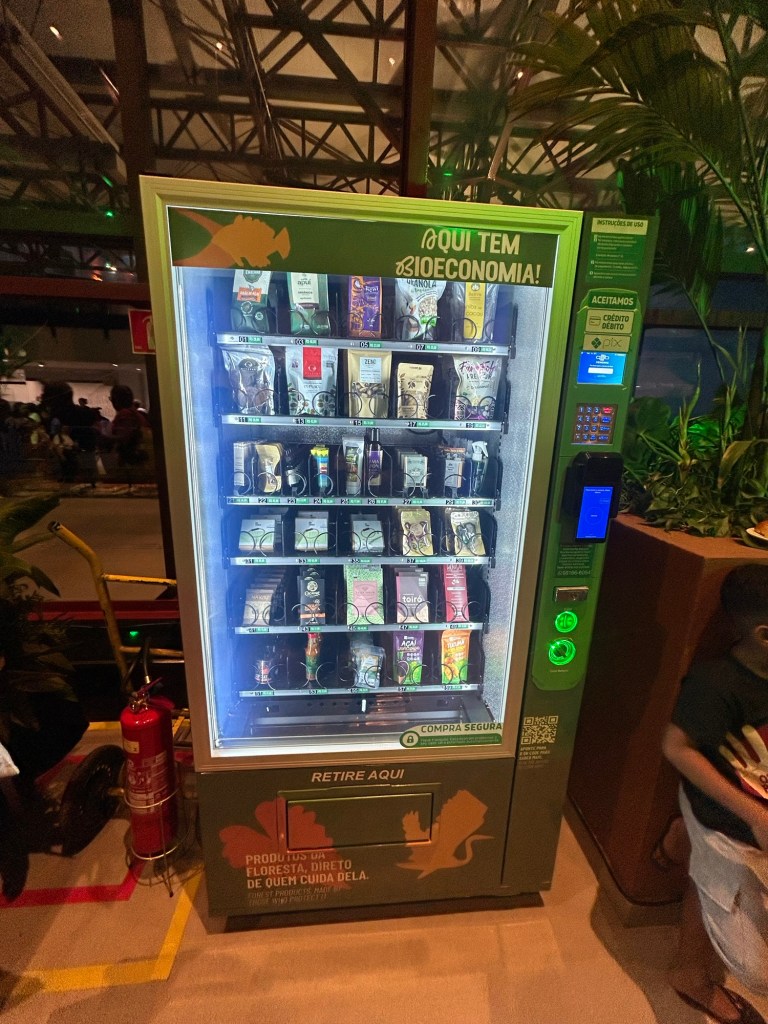
We create wealth with forest identity marketing
 Robert Davenport
Leave a comment